
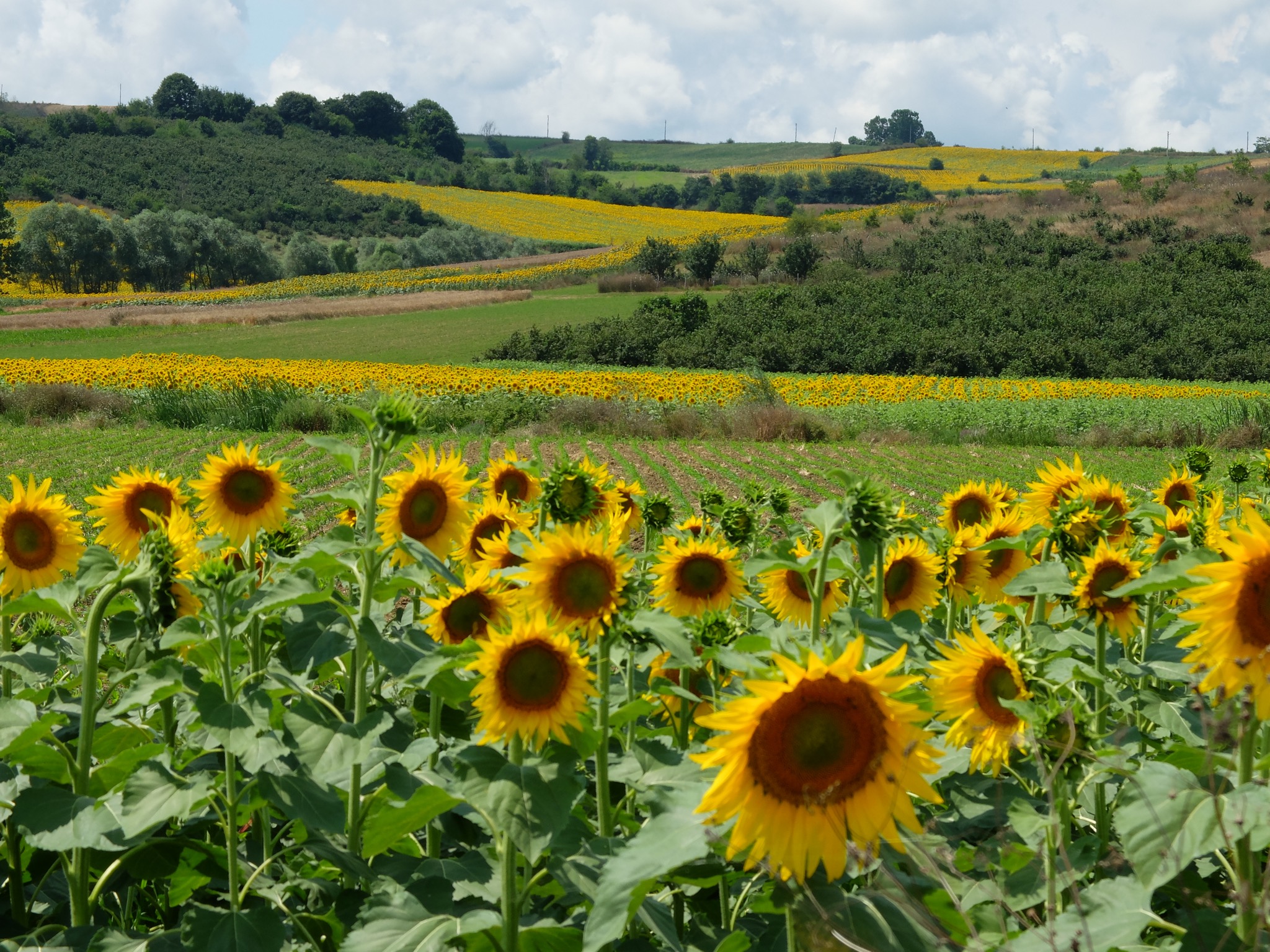

It’s January 2026. A Sunday. Around one in the afternoon.
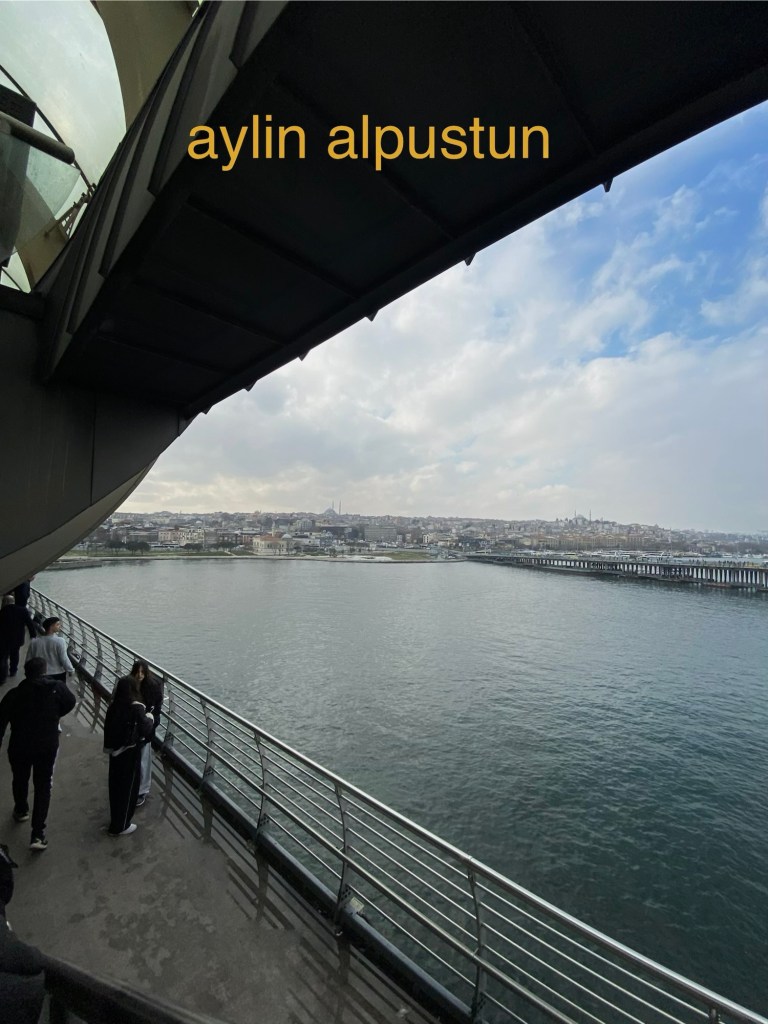
I’m at water’s edge where the Golden Horn meets Old Town in Istanbul.
I step off at Haliç Metro Station to attend a talk on “performing arts in the open commons” at Istanbul Textile Traders’ Market (İMÇ).
Could Haliç be the only metro station in the world constructed atop a bridge, suspended above the sea?
A bit of mental luggage for the road.
I descend the station’s escalator and cross the wide tram&car lane toward Eminönü, home to the renown Spice Bazaar and the storied Hamdi Restaurant.
With more than an hour before the talk’s schedule, a different route to get lost, weaving through the labyrinthine alleys of the bazaar has an undeniable pull.
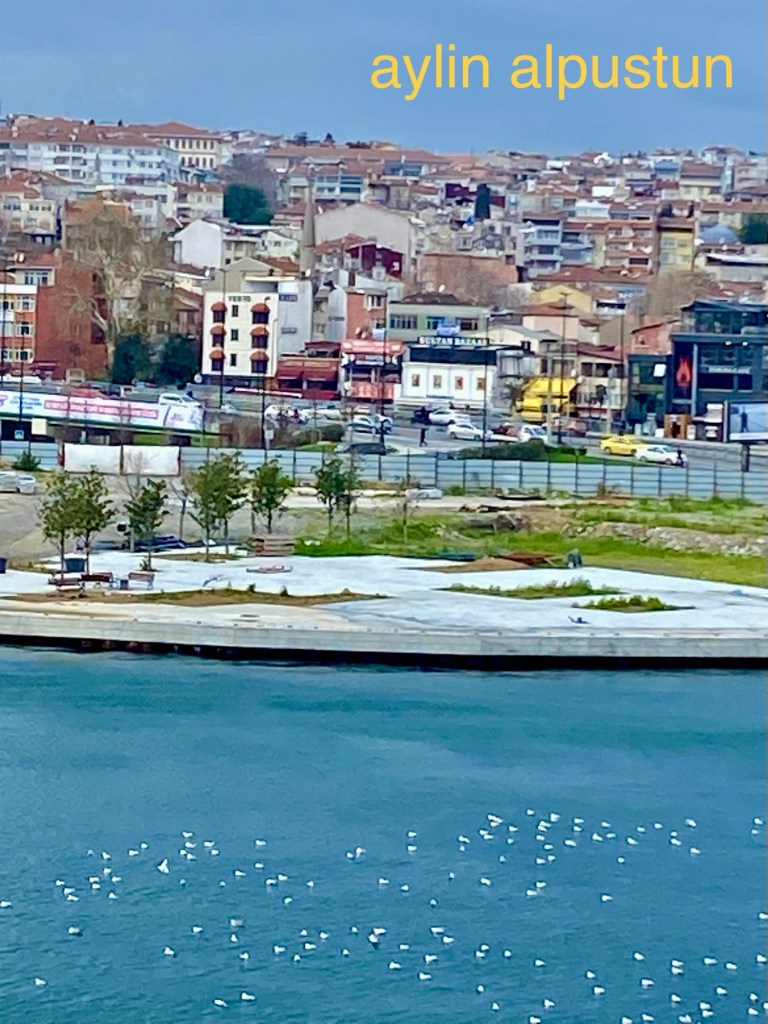
A maze dominated by the Golden Horn, the pulsing heart from which Istanbul draws its breath.
I start walking in the area known as Küçükpazar. (Little Market)
To orient myself, I cast my eyes upward to catch the street sign. Kıble Sokağı (Kıble Street).
A passing thought …. ‘who names these streets? according to what? to preserve the area’s history?’
A ‘seed’ filed away for later.
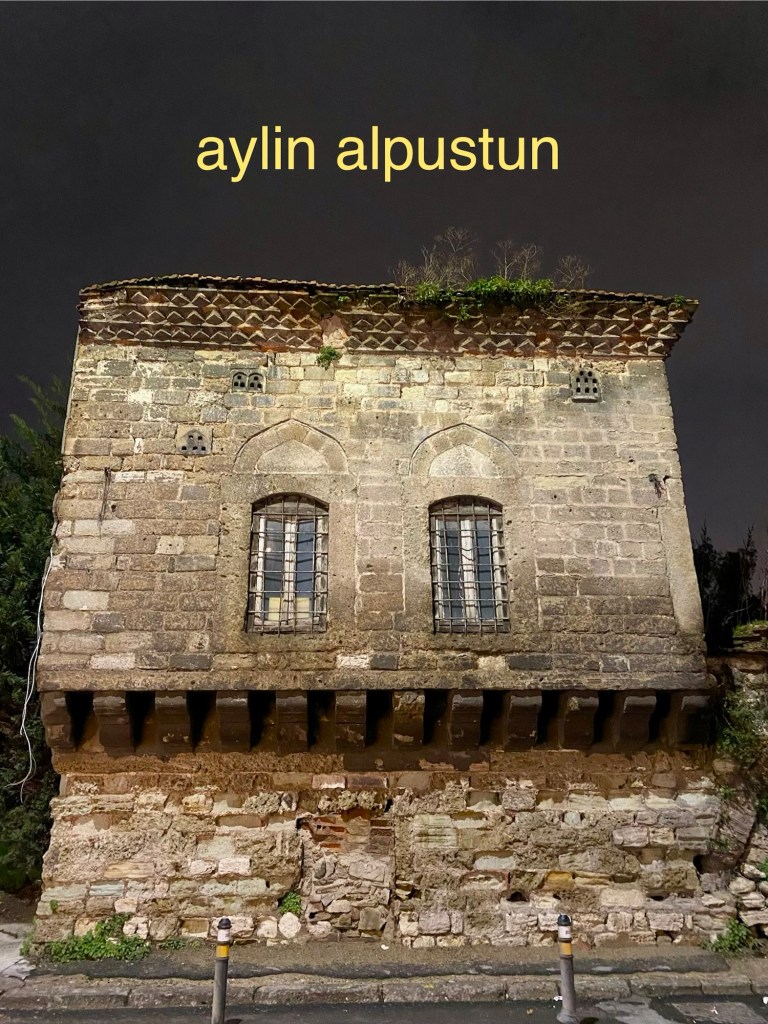
I pause at the junction of two streets where a weary abandoned building stands, expertly settled into its plot.
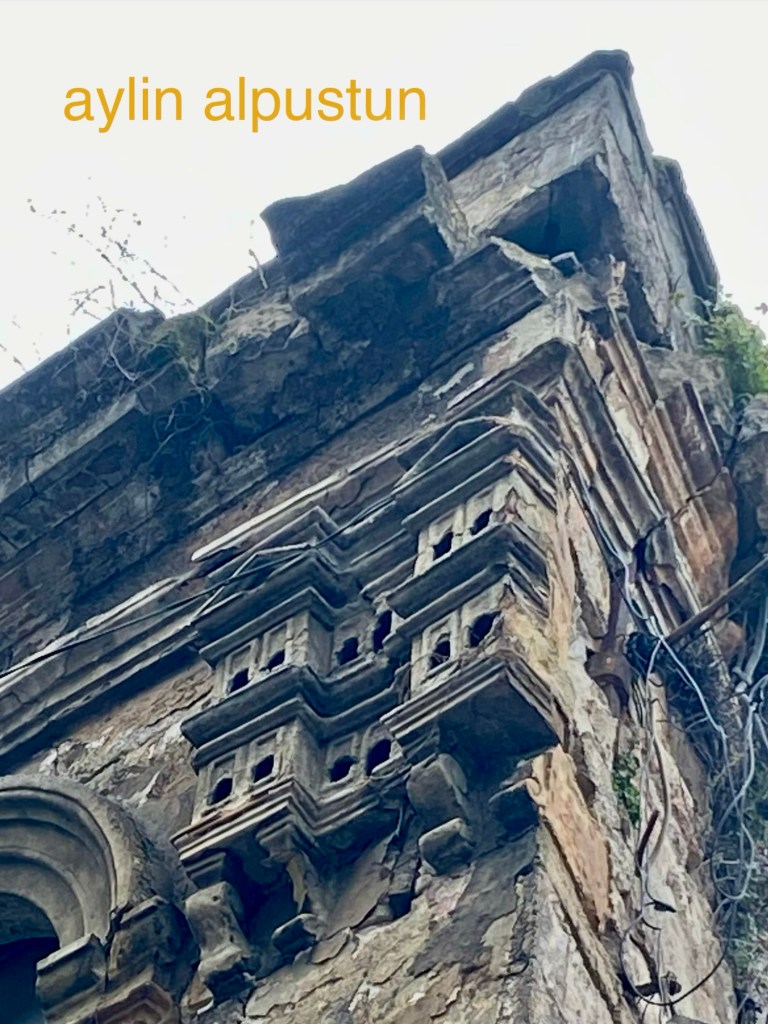
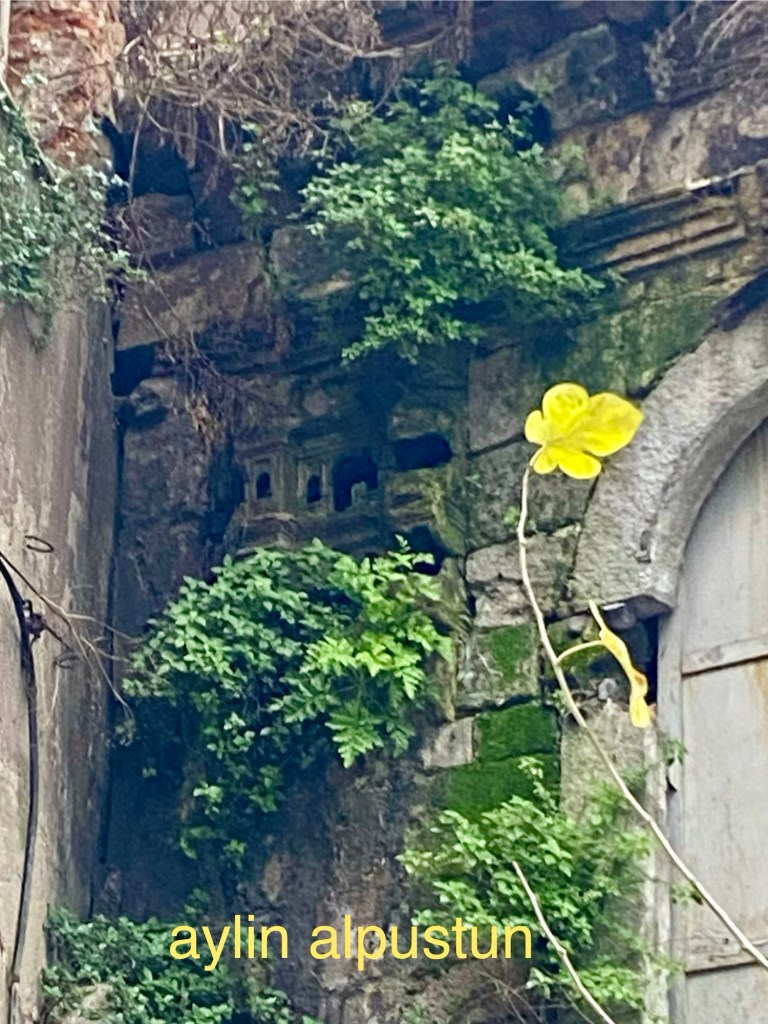
And on its façade, something ornate catches my eye: a birdhouse.
It is a route I’ve walked for years. In fact, it’s my favourite track to the Bazaar if I’ve taken the metro into town.
Did I never draw my focus from the pavement and scan the heights to catch a glimpse of this magic?
It may be that Eminönü was without its familiar murmur on a Sunday morning. In a city woven from sound, absence of clamour does alter perceptions, shifts paths.
‘Bird palaces’, ‘sparrow pavilions’, ‘jeweled citadels’, ‘tribunes for the winged’, ‘storybook kingdoms for feathers’…
Whatever title we bestow upon them, they’re tiny jewels scattered across Istanbul’s skyline, little treasure boxes of grace.
Wander any quarter of Istanbul, a hallowed duty of care for the city’s four legged residents is visible via food offerings lining the pavements.
Higher up are feathered couriers’ dwellings, modest sanctuaries suspended from branches or anchored to building facades.
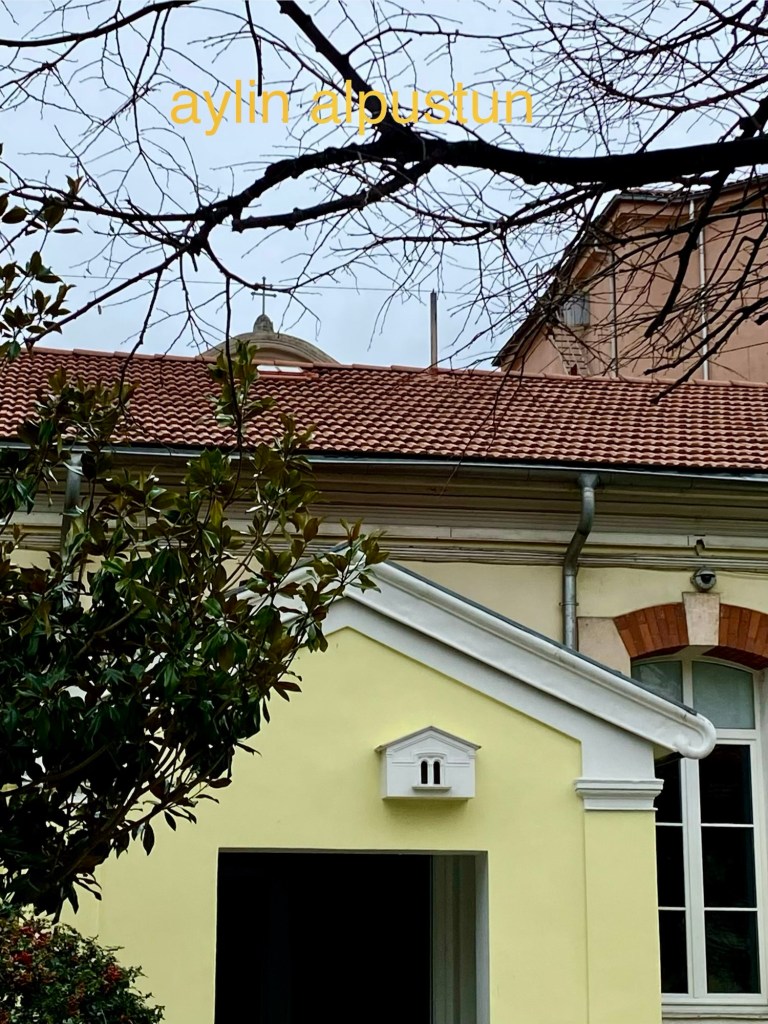
In a gesture of refined diplomacy, The French Cultural Center in Istanbul has crowned one of its facades with a nesting place, extending a hand of European courtliness to honour this ancient lineage.
Yet birdhouses of earlier eras were something else, shaped by a level craftsmanship seldom encountered today.
Within the Ottoman Empire, every living soul—from the towering tree to the wandering spirit—shared a sacred citizenship
Birds, as sacred massengers, were devotedly revered as ethereal symbols of the soul reaching for the sky.
Impelled by hallowed duty, a legacy of guardianship, architects carved delicate sanctuaries into the city’s foundation.
Not holes, not cages, not traps but elegant palaces, kiosks, mansions, terraces — in miniature.
Through sublime union of profound compassion and refined aesthetics, façades became a canvas for devout hospitality.
Who knows, maybe these avian sentinels acted as business cards for stonecutters, an opportunity to showcase their mastery and skills?
Apparently one of the oldest birdhouses in Istanbul (district of Fatih) dates back to 1504 adorning the façade of Bali Paşa Mosque.
Time regrettably has a cruel appetite for the delicate.
I have little doubt there were earlier examples, yet time must have found their materials too fragile to spare and reach us.
I linger, photographing the birdhouse from every angle.
The light is not ideal.
Never mind.
I am an incurable memory hoarder.
Anyhow, the “ideal” light can be created later on via edits.
A gentleman draws near and introduces himself as “The Manager” of the neighbouring parking lot.
He must have been observing me. He points out that the façade is home to not one, but two birdhouses. Hinting I must capture both before they vanish.
I find myself wondering about the building itself.
Who built it?
Who owned it?
When was it built?
What was it used as?
What stories unfolded behind its walls?
The parking lot “manager” tells me it is an “inn” with nineteen rooms.
In 1977, the building was officially registered as a protected cultural asset within the Süleymaniye Conservation Area—prospect of lifelong guardianship feels like finding a harbor after a long crossing. Genuine relief.
Today, the former “inn” belongs to someone from Trabzon (a city bordering the Black Sea), he relays.
Proposed restitution projects, I am told, failed to receive approval from the Heritage Council, hence the destitute state.
It will most likely be put up for sale again ‘The Parking Lot Manager’ remarks. (Transcribed as heard. Preserved as told—let it remain part of the oral archive).
Unfortunately, I cannot find the architect’s name or signature on the building. The car park attendant does not know either.
Some monuments in the Beyoğlu and Nişantaşı districts of Istanbul still proudly bear the names of their crafters.
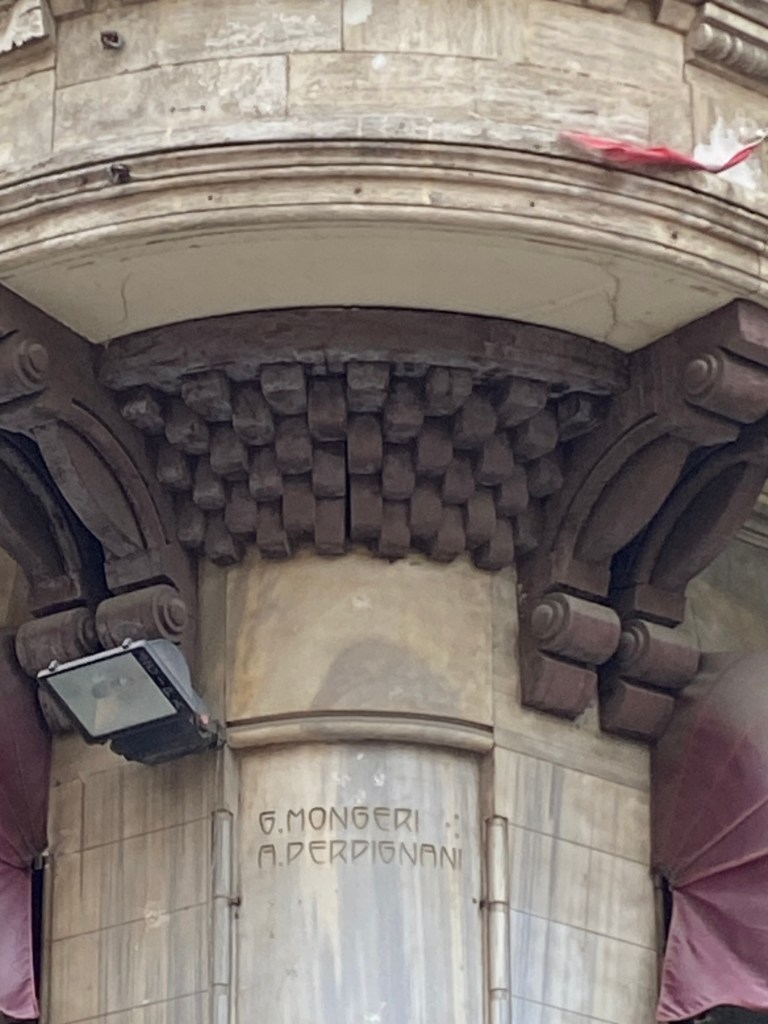
An elegant building on Rue de Pera, signed by the amazing Mongeri
This one remains silent. A nameless sentinel of a forgotten era.
Once home, I flick through online articles for traces of buildings around Küçük Pazar.
(all cited at the bottom).
As I dig, a name surfaces: Jacques Pervititch. A Croatian-born cartographer and topographical engineer.
Mercifully, he charted the labyrinthine urban sprawl, leaving behind a precise testament of Istanbul’s footprint, ensuring that even its most perishable wynds were recorded
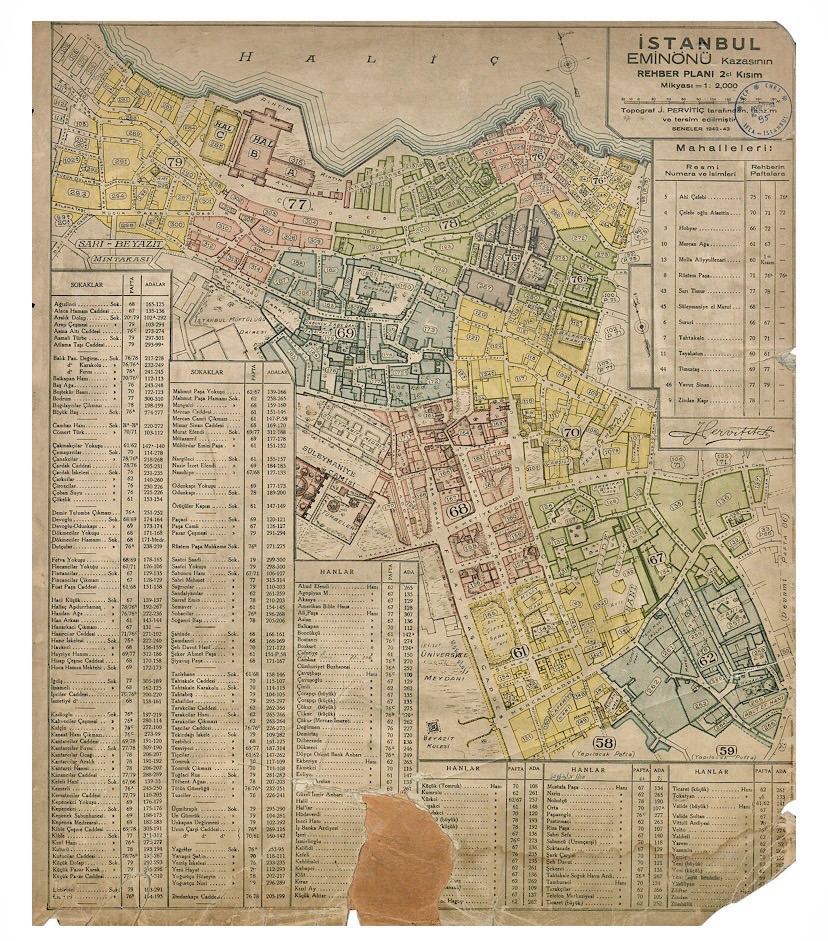
The detailed Pervititch maps now serve as the blueprints of our memory.
On his 1943 map, this particular building is recorded as the “Arab Hotel” (also known as Arab Han or Qibla Street Inn).
The name unveils the building’s hallowed past – marking it, at one point, as a waystation, a travellers’ lodge, a house of rest….
Details of Arab Hotel’s birth has unfortunatley vanished into the mists, a mere skeleton remains draped in 19th-century Western finery.
The name’s ‘why’ has also sadly been swallowed by the city’s long memory.
Yet, the stones of Istanbul remember a tradition: many an inn was crowned with the names of the wondering souls who rested within its embrace —travelers who left their titles in the rafters and their stories in the halls.
The name may point to its clientele. One can of course only speculate across the distance of a century.
The articles I read on Arab Hotel all refer to a certain Erol Baruter, the building’s owner.
He recalls memories of a grander life.
When his father claimed the keys in 1951, the halls were apparently a waystation for weary dreamers – bachelor rooms for men seeking their fortunes in the city.
Seven decades later, the articles lamentably relay a fractured narrative.
The building as ‘a cluttered patchwork of cold warehouses, cramped workshops, low-rent stalls.’
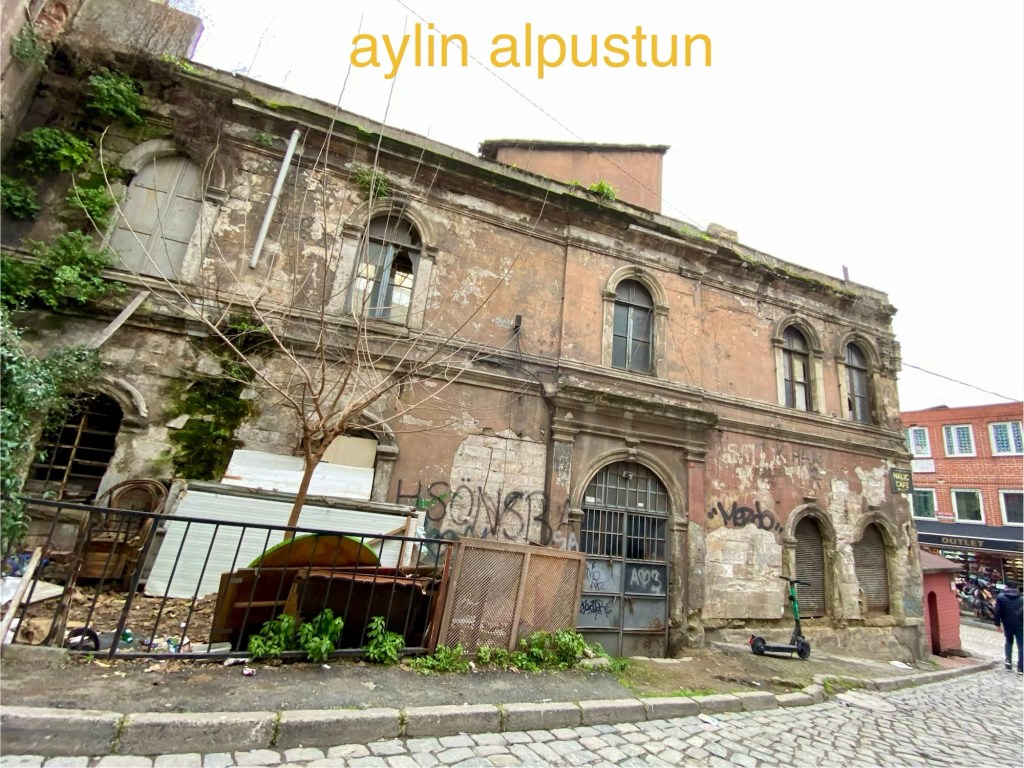
Arab Hotel’s historical pulse grown faint, buried under the weight of neglect and decay.
Before roads bound land together and trade flowed via water, Golden Horn, a natural harbour, blossomed as a thriving commercial heart.
The port must have served thousands of sailors and merchants in a dense natural bazaar within the Eminönü, Laleli, and Beyazıt triangle (Istanbul’s “old town”).
The shoreline must have hosted many inns, like pearls on a string.
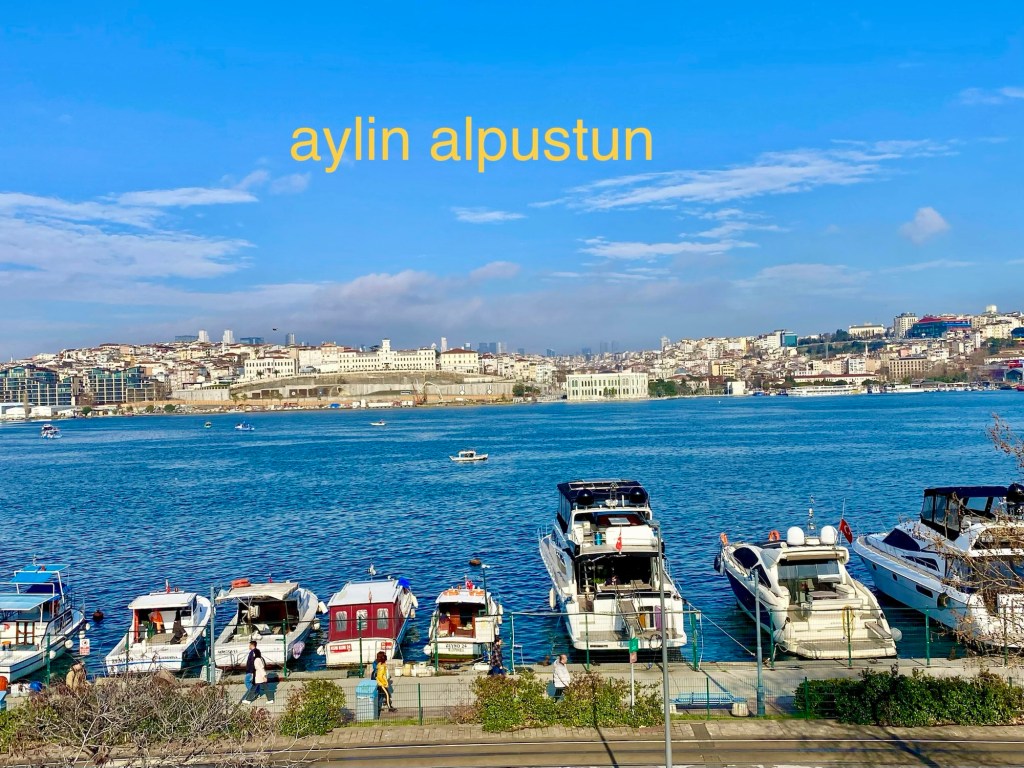
When trade found new paths via roads, the rhythm of markets shifted, politics came into play and comfort became a measure, these lodgings must have been quietly deserted as their allure faded.
And such must have been the fate of Arab Han.
Stepping back into the story held within the stones of the Arab Hotel….
In a curious twist, the keeper of the parking lot was also the keeper of Arab Hotel’s keys.
He offered to take me in for a quick peek.
Oddly, wonder silenced my pulse, curiosity eclipsed my fear, dread bowed to discovery.
And quite recklessly, I followed a total stranger into an empty, derelict building as he unlocked the door and ushered me in.
In hindsight…. I’de like to call it “vacancy of mind”…. Honestly very very dire consequences were entirely possible…
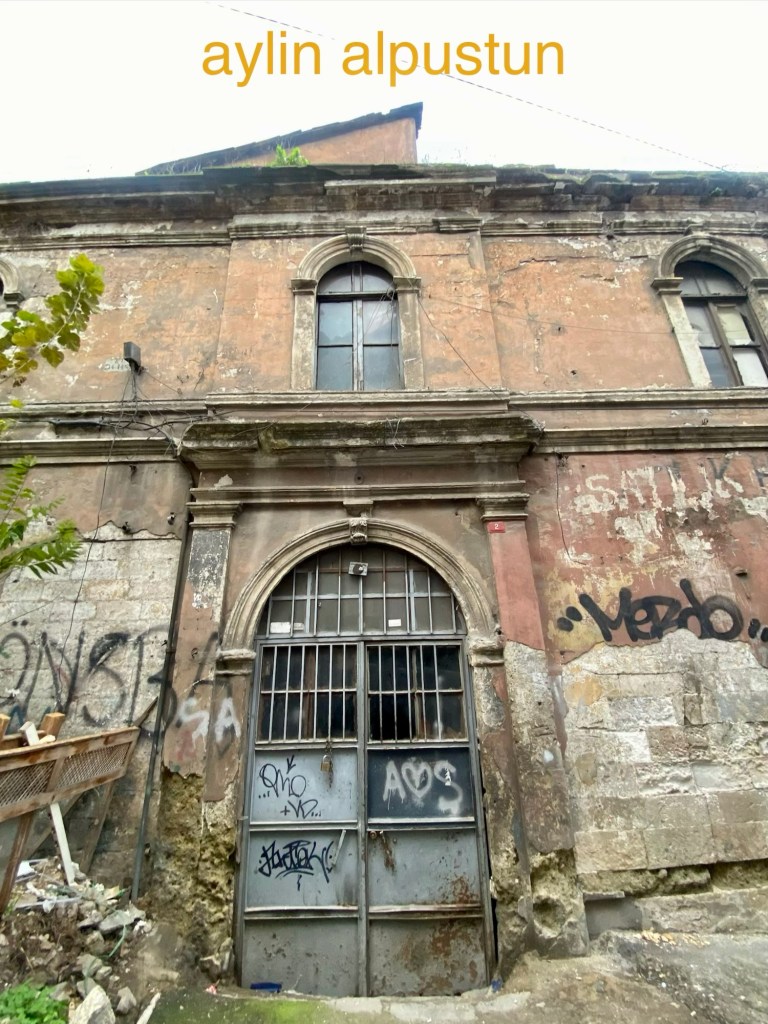
The key turns, the door creaks on its hinges, I cross the threshold and step in.
What I take in is heartbreaking.
This former wayfarer’s sanctuary is now a slumbering ruin – shatterred, solitary, gray, weary, bone-tired.
A fallen royalty, reclaimed by dust.
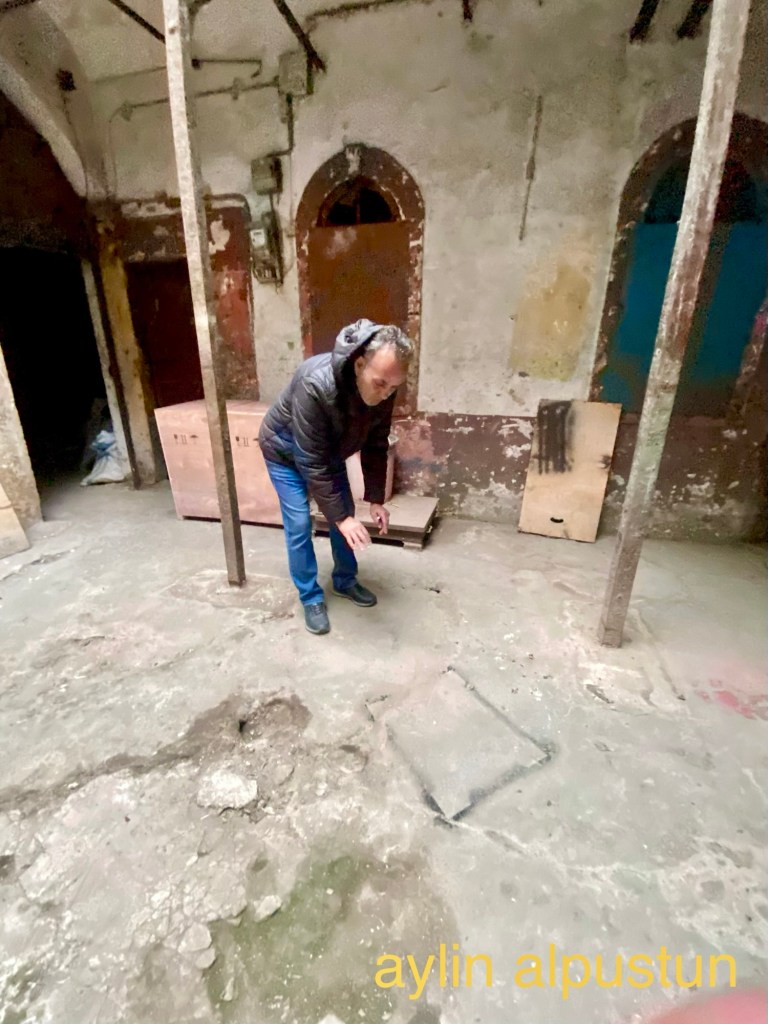
At the heart is a courtyard. Apparently water sprang from a well in the center. Now choked by concrete, marring the fabric of the past.
The craftsmanship, even in its wounds, still shines through.
In its prime, the Arab Hotel must have been a sanctuary of finesse.
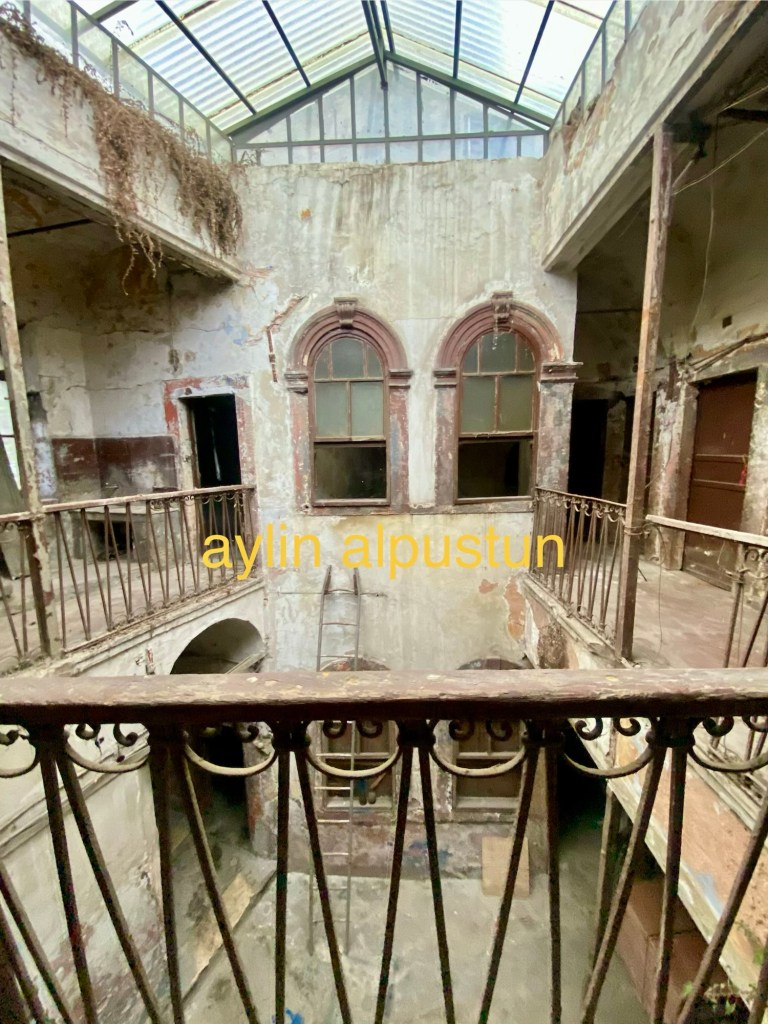
The interior is a masterwork of structural lyricism.
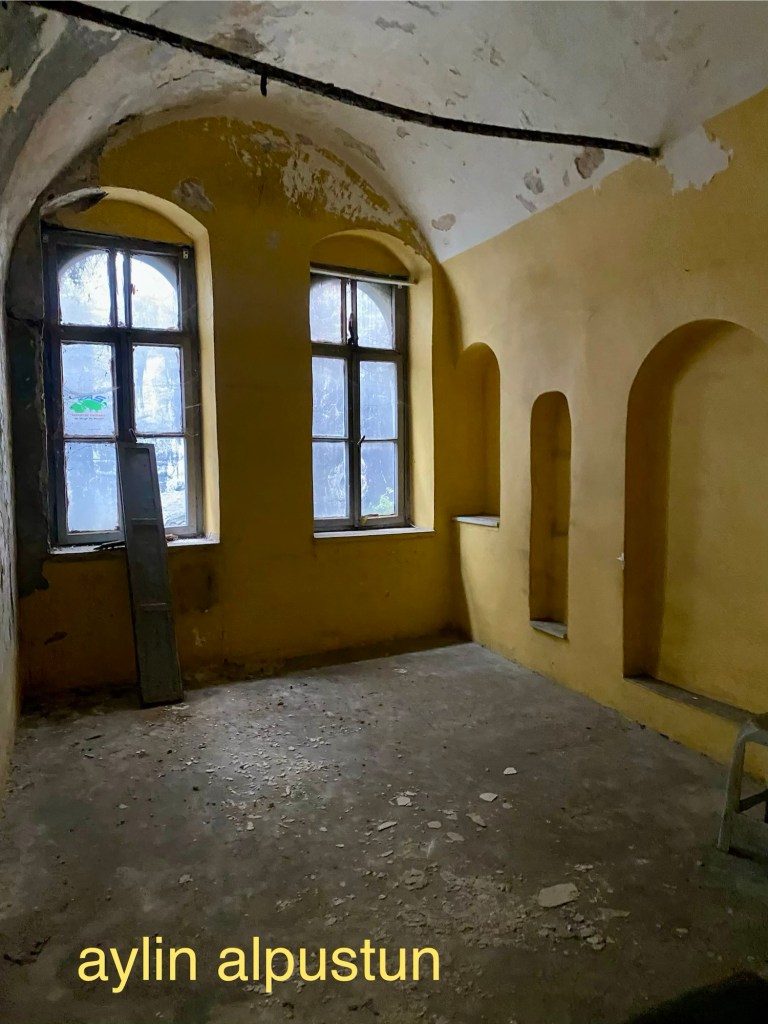
The tall windows with elegant arches inviting the city in;
The stone hearths in every room promising a sanctuary of warmth to wandering souls;
The wrought iron lace still guarding the weighty antiquated structure;
The high, vaulted ceilings designed to amplify laughter
The floor tiles, worn smooth by a thousand ghosts.
The majestic stairs patiently bearing the slow erosion of a thousand homecomings
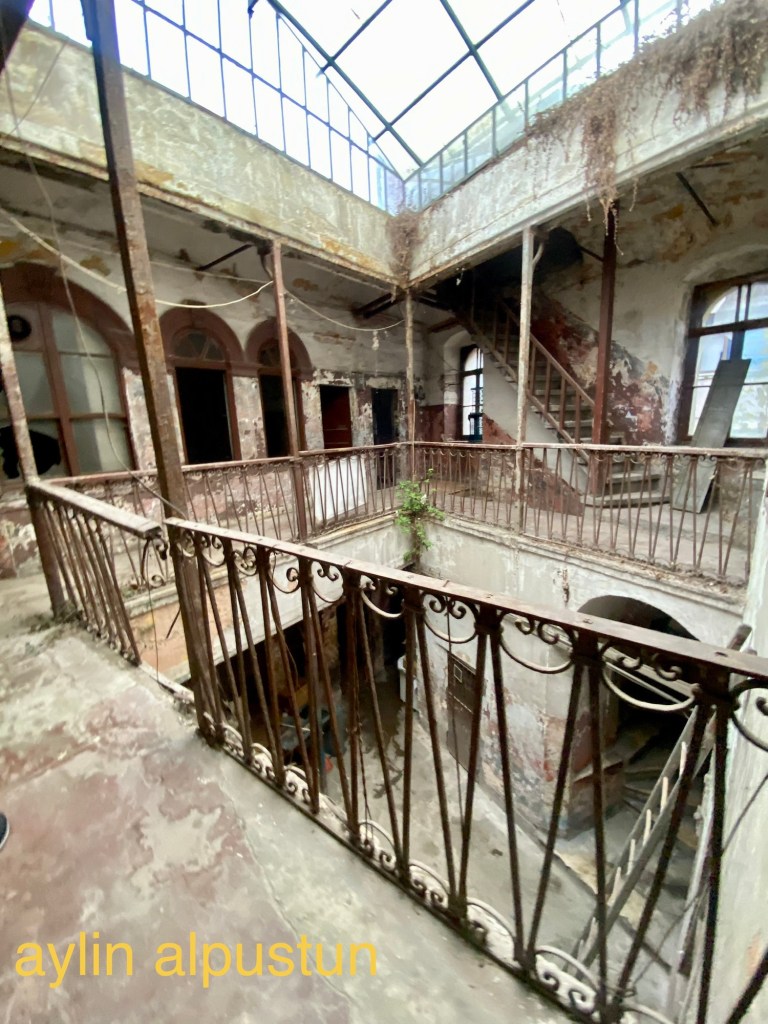
desolate yet dreamlike
dusty yet divine
forgotten yet fabled
rusted yet radiant
scarred yet soulful
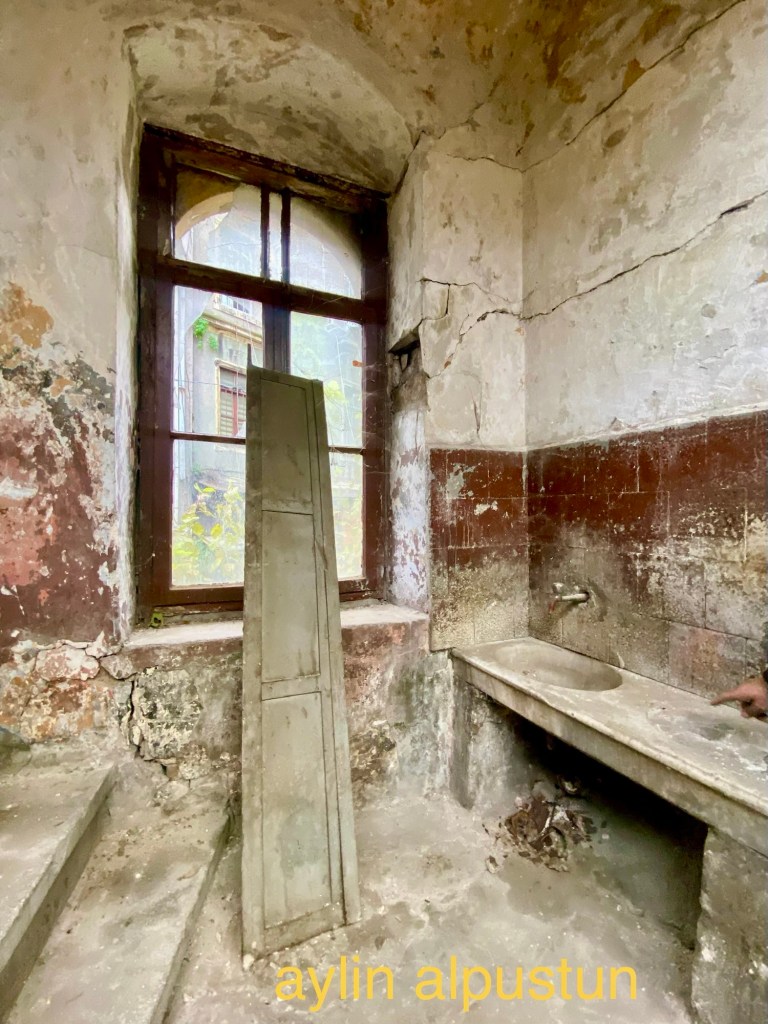
A weighty history with no memory collection, merely the remains of fatigued splendor.
The hands that first drew the lines of the Arab Hotel are regretably lost to the fog of history.
We do not know if a single name claims its stones or if it was breathed into life by a collective pulse of master builders.
Yet, for all their grand ambition, the greatest signature of these masters must have been “merhamet” (mercy/compassion).
Such ethereal grace to crown the façade with miniature stone palaces where the sky’s guests may feast, nest and find rest.
A home fit for royalty amidst the clouds.
Despite the bygone grace, the refined aesthetic touch, the noble hearts are omnipresent behind every curve.
These architects of grace, gifted the city not just with roofs and walls, but with visual testaments to the grandeur of the human spirit
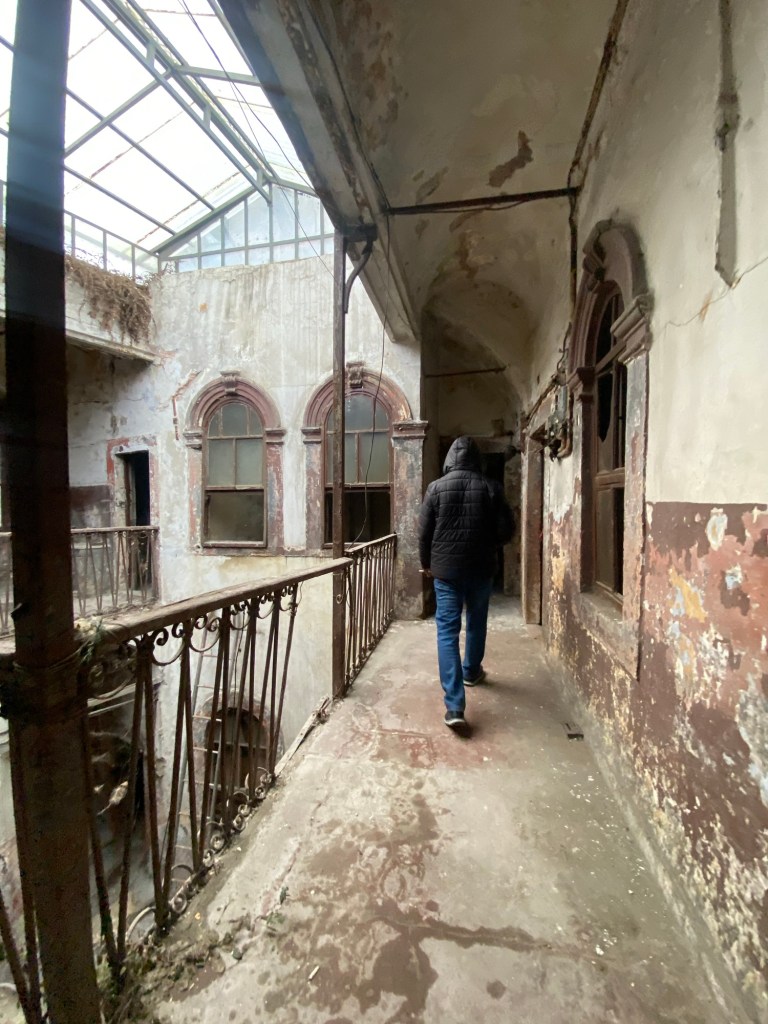
A nameless gift to Kıble Street that has outlived its creators by centuries.
The Arab Hotel may keep its past a secret, but its graceful soul is visible on its exterior. The intricate ‘bird palaces’ nestled in its walls remains a living monument to “merhamet” —an enduring legacy of compassion for the winged wanderers that call the city home.
Next time you wander Istanbul’s labyrinth, you may want to lift your gaze.
High above the chaos, between earth and ether, eaves hold tiny secrets: built by noble hearts, exquisite jeweled sanctuaries fit for winged royalty.
Address: Kıble Street, Eminönü, Istanbul
References:
Boyacıoğlu, D. (2010). Arap Han and its place among 18th-19th century Istanbul inns. Journal of Uludag University Faculty of Engineering and Architecture, 15(2).
Ekşi, Ş. & Suri, L. (2023). The Historical Development of the Eminönü Han District. European Journal of Science and Technology, (50), 121–133.
Göktan, D. (2005). Restoration project of Arap Han in Eminönü Küçükpazar [Master’s thesis, Istanbul Technical University]. Institute of Science and Technology.
 AylinAlpustun's Blog